Money Coming Soon, Coming In, Coming Back, Coming Fast, or Coming Through: What Each Phrase Means
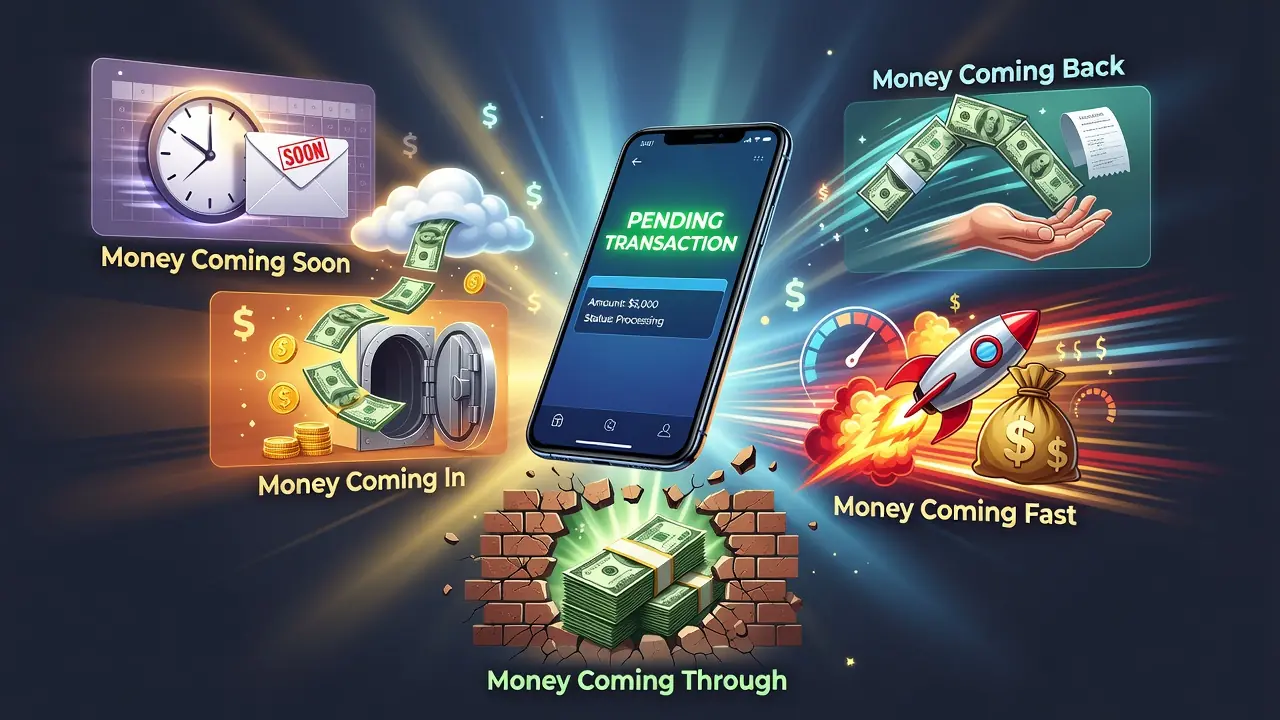
A single word change alters the entire meaning of a financial promise. Tell someone their refund is "coming soon" and they wait patiently. Tell them it's "coming through" and they check their bank app every ten minutes. These five variations on a simple idea - money moving toward you - carry distinct implications about timing, certainty, and the emotional weight behind the transaction. Anyone who has stared at a pending payment notification knows the difference between hope and confirmation is often just one preposition away.
This distinction matters far beyond casual conversation. Banks, payroll systems, gig economy apps, and even customer service scripts choose these phrases deliberately. A support agent who says "your money is coming back" is making a different commitment than one who says "your money is coming fast." One phrase describes a returning path - a refund, a reversal, a settlement. The other describes velocity, a speed guarantee that sets expectations for how quickly funds will land. If you've ever wondered why certain phrasing shows up around online promotions and games - for instance, a slot machine or bonus feature described in terms you can see here - it's because the language of arrival taps directly into anticipation, a psychological lever marketers understand well.
Understanding these five expressions gives you a sharper read on financial communication, whether you're parsing a bank notification, a freelance client's promise, or a customer service email. Each phrase encodes a specific relationship between time, source, and certainty.
Money Coming Soon: The Language of Anticipation
"Money coming soon" is the vaguest of the five phrases, and that vagueness is often intentional. It signals a future event without committing to a specific date or mechanism. This phrasing shows up constantly in payroll announcements, tax refund trackers, and investment payout notices.
Why Businesses Use This Phrase
Companies favor "coming soon" because it manages expectations without exposing them to liability. A payroll department announcing that "your bonus is money coming soon" avoids naming an exact date, which protects them if processing delays occur. This is standard practice in HR communications and financial services alike - soft language that signals direction, not a contract.
Common Contexts: Paychecks, Refunds, Investment Payouts
Tax authorities frequently use similar language when a refund has been approved but not yet disbursed. Freelance platforms tell contractors that a payment has cleared underwriting and is now simply pending release. In each case, the underlying message is the same: the money exists, the process has started, but the final step hasn't occurred.
How to Interpret Vague Timing Promises
When you encounter this phrase, look for supplementary details - a processing window, a batch date, or a reference number. Absent those specifics, treat "soon" as anywhere from a few days to a few weeks, depending on the institution's typical processing speed.
- Payroll bonuses awaiting final approval
- Tax refunds cleared but not yet transferred
- Insurance settlements pending administrative sign-off
- Freelance payments released from escrow
Money Coming In: Tracking Income and Cash Flow
"Money coming in" describes an ongoing or recurring inflow rather than a single event. It's the language of budgeting, business accounting, and personal finance planning. Unlike the anticipatory tone of "coming soon," this phrase is often used in the present tense to describe a pattern.
Personal Finance: Salary, Freelance Income, Passive Income
When someone says "I have money coming in from three different clients," they're describing a stream, not a single transaction. This phrasing is common in freelance and gig economy conversations, where income arrives irregularly from multiple sources rather than a single biweekly paycheck.
Business Cash Flow: Revenue Streams and Receivables
In a business context, "money coming in" often refers to receivables - invoices that have been sent and are expected to be paid within a set term. A small business owner tracking cash flow will separate "money coming in" from "money going out" as the two pillars of financial health. Positive net flow depends on the former outpacing the latter consistently, not just occasionally.
Why This Phrase Signals Stability Rather Than a One-Time Event
The present-tense, ongoing nature of this phrase makes it a marker of financial stability. A household with steady money coming in every month is in a fundamentally different position than one waiting on a single lump-sum payment. This distinction matters when evaluating creditworthiness, loan applications, or even personal budgeting confidence.
Money Coming Back: Refunds, Reversals, and Recovered Funds
"Money coming back" implies a return journey - funds that left your account and are now retracing their steps. This phrase is closely associated with refunds, chargebacks, and recovered losses, and it carries a distinct emotional tone compared to fresh income.
Refunds and Chargebacks Explained
When a merchant issues a refund, or a bank reverses a fraudulent charge, the customer experiences money coming back rather than money coming in. The distinction is meaningful: a refund restores a previous state rather than adding new value. Consumers instinctively understand this difference, which is why refund satisfaction often hinges on speed rather than amount.
Investment Returns and Recovered Losses
Investors use this phrase when a position that was underwater turns profitable again, or when a loan is repaid after a period of default. "The money is finally coming back" often carries relief as much as financial gain, reflecting the psychological toll of financial uncertainty.
Emotional and Financial Relief Tied to This Phrase
Because this phrase implies restoration rather than growth, it tends to trigger a sense of resolution. People rarely celebrate a refund the way they celebrate a bonus, but they do feel a distinct sense of closure when money coming back finally clears their account.
Money Coming Fast: Speed as the Defining Factor
Speed is the entire point of this phrase. "Money coming fast" is used when the timing of a transaction matters as much as, or more than, the amount involved. This language dominates marketing for instant loan apps, same-day payment services, and emergency cash advances.
Instant Payment Apps and Same-Day Transfers
Peer-to-peer payment platforms and instant transfer services built entire business models around this promise. Where traditional bank transfers might take one to three business days, these services compress that window to minutes or seconds, marketing themselves explicitly around the idea of money coming fast.
Emergency Loans and Cash Advances
Short-term lenders use speed as their primary selling point, since customers seeking emergency funds are rarely comparing interest rates as carefully as they are comparing turnaround time. The tradeoff, often unstated, is that faster access frequently comes with higher fees or interest rates.
The Trade-Off Between Speed and Cost
Faster money movement almost always carries a price, whether it's a transfer fee, a higher interest rate, or reduced negotiating power. Understanding this tradeoff helps consumers decide whether the urgency justifies the added cost.
- Instant transfer fees on peer-to-peer apps
- Higher APRs on same-day cash advances
- Premium charges for expedited wire transfers
- Rush processing fees on certain refunds
Money Coming Through: Confirmation and Final Arrival
"Money coming through" signals that a transaction is actively processing and nearing completion - it's the phrase used at the final stage, when funds have left the sender and are en route to the recipient's account. This is distinct from "coming soon," which implies an earlier, less certain stage.
Bank Transfers and Wire Confirmations
When a bank representative says "your wire is coming through," they mean the transaction has been initiated and is moving through the clearing system. This phrase typically appears at a point where cancellation is difficult or impossible, marking a threshold of near-certainty.
Payment Processing Delays and What They Mean
Sometimes "coming through" describes a transaction stuck in an intermediate state - authorized but not yet settled. This can happen with international transfers crossing multiple banking networks, each adding processing time before final confirmation.
Real-Time Payment Systems and Instant Confirmation
Modern real-time payment rails have shortened the gap between initiation and confirmation dramatically, making "coming through" nearly synchronous with completion in many domestic transfer systems. This shift has changed customer expectations, making delays feel more conspicuous than they once did.
Comparing the Five Phrases Side by Side
Each phrase occupies a distinct position on a timeline and carries a different implication about certainty. Laid out together, the differences become clear.
Timing Differences at a Glance
- Coming soon - future, uncertain date
- Coming in - ongoing, recurring inflow
- Coming back - returning funds, restoring a prior state
- Coming fast - expedited, urgency-driven
- Coming through - active, near-final confirmation
Which Phrase Signals the Highest Certainty
"Coming through" typically signals the highest certainty, since it describes a transaction already in motion within a settlement system. "Coming soon" sits at the opposite end, describing intent without a firm mechanism yet engaged.
Choosing the Right Phrase in Professional Communication
Businesses and individuals communicating about payments should match their language to the actual stage of the transaction. Overpromising with "coming fast" when a payment is still in early processing creates unnecessary frustration; underpromising with vague "coming soon" language when a transfer is already confirmed can seem evasive.
Frequently Asked Questions
What does it mean when someone says money is coming soon but gives no date?
It usually means the payment process has started but hasn't reached a stage where a firm date can be guaranteed. This is common with tax refunds, bonuses, or insurance payouts still awaiting administrative approval.
Is "money coming through" always faster than "money coming soon"?
Generally yes, since "coming through" describes an active transaction already moving through a payment system, while "coming soon" describes a future event that hasn't started processing yet. The gap between the two can range from hours to weeks depending on the institution involved.
Why do refund notifications use "coming back" instead of "coming in"?
Because a refund restores money you previously had rather than adding new income, the language reflects a return journey rather than a fresh inflow. This distinction helps set the right emotional and financial expectation for the recipient.
Do faster payment options always cost more?
In most cases, yes. Instant transfers, same-day loans, and expedited wire services typically charge premium fees or carry higher interest rates compared to standard processing times, since speed requires additional infrastructure or risk absorption on the provider's side.
How can I tell if a payment delay is normal or a sign of a problem?
Compare the delay against the provider's stated processing window; a wire transfer taking two business days is normal, but one stuck for over a week without explanation warrants a direct inquiry. Persistent status of "coming through" without settlement is a signal to contact your bank or payment provider directly.
Why do marketing materials for financial products use urgency-driven phrases like "coming fast"?
Urgency language taps into a real consumer need - many people seeking fast cash options are in genuinely time-sensitive situations. Providers use this phrasing to differentiate themselves from slower, traditional banking timelines, though the promise often comes paired with added fees.