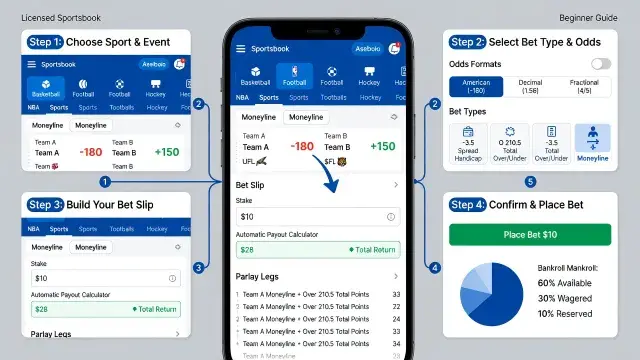
How to Place a Bet Step by Step: Betting Basics for Beginners and a Sportsbook Bet Placement Guide
Roughly nine out of ten first-time bettors abandon their bet slip before completing a wager - not because they change their mind about the pick, but because the checkout process on a sportsbook confuses them. A moneyline, a parlay leg, an odds format toggle: these small details stall people at the exact moment they meant to click confirm. The mechanics of placing a bet are simpler than they look, but nobody explains them in plain language.
That gap matters more than it seems. A misread decimal odd or a rushed tap on the wrong bet type can turn a winning prediction into a losing ticket, and no amount of sports knowledge fixes a mistake made at the cash-out screen. For a clear walkthrough of the exact screens and confirmations involved, the resource at how to place bet step by step breaks down the process used by most licensed sportsbooks today. Understanding that sequence before you deposit a single dollar saves both money and frustration.
This guide covers the entire path from opening an account to watching your ticket settle. It treats betting basics for beginners as a discipline with its own vocabulary and logic, not a guessing game. By the end, you'll know exactly how to place a bet step by step, how odds translate into payouts, and how to confirm and submit a wager without second-guessing the screen in front of you.
Who This Guide Is For and What You'll Learn
This tutorial is built for people who have never opened a sportsbook account and for casual bettors who've placed a handful of bets through a friend's account or a casual office pool but never gone through the process independently. It also serves readers who tried once, got confused by odds formats or bet types, and gave up before finishing.
Who Should Read This
Anyone opening their first betting account falls into this category, along with fans who understand their sport deeply but have never translated that knowledge into an actual wager. Recreational bettors switching from one platform to another will also find the comparisons useful, since bet slip layouts differ slightly between operators even when the underlying logic stays the same.
What You'll Be Able to Do After Reading
By the final section, you should be able to open an account, deposit funds, locate a market, build a bet slip, and complete the transaction without hesitation. You'll also recognize the vocabulary - moneyline, spread, total, parlay - well enough to follow a broadcast or a betting forum without feeling lost.
- Understand core betting terminology before opening an account
- Follow a repeatable process for finding and placing any bet
- Read odds in both American and decimal formats
- Avoid the most common beginner mistakes at checkout
Betting Basics for Beginners: Terms You Need First
Before touching a bet slip, a few concepts need to be second nature. Skipping this step is the single biggest reason beginners misplace bets or misunderstand their potential return.
Odds Formats Explained
American odds use a plus or minus sign - a minus figure like -150 tells you how much you'd need to stake to win 100 units, while a plus figure like +150 shows how much you'd win on a 100-unit stake. Decimal odds, common outside North America, multiply your stake directly: odds of 2.50 mean a 10-unit stake returns 25 units total, profit included. Fractional odds, still seen in the UK, express the same relationship as a ratio, such as 3/2. Most sportsbooks let you toggle between formats in account settings, so pick whichever one you find intuitive and stick with it.
Bet Types You'll Encounter
A moneyline bet is a straight wager on which side wins, with no point margin involved. A spread (or handicap) bet adjusts for a perceived skill gap between teams, requiring the favorite to win by more than a set margin or the underdog to lose by less than that margin. A total, often called an over/under, asks whether the combined score will exceed or fall short of a posted number. Parlays combine multiple selections into a single ticket, with all legs needing to win for any payout, and they carry higher risk in exchange for higher potential return.
Stakes, Payouts, and Bankroll Basics
Your stake is the amount you risk. Payout refers to the total returned if you win, which includes your original stake plus profit. Managing a bankroll - the total amount you're willing to allocate to betting over a set period - matters more than picking winners consistently. Bettors who last treat each wager as a fraction of a broader pool of funds, not an isolated event.
Sportsbook Bet Placement Guide: Setting Up Your Account
Every legitimate sportsbook requires identity verification before you can withdraw winnings, so it pays to complete this stage properly the first time.
Choosing a Licensed Sportsbook
Confirm the operator holds a license from a recognized gaming authority in your jurisdiction. Licensed books publish this information in the site footer or a dedicated regulatory page. Unlicensed platforms may offer attractive odds but carry real risk around withdrawals and dispute resolution.
Registration and Identity Verification
Registration typically asks for your name, date of birth, address, and email. Verification (often called KYC, or "know your customer") requires a government-issued ID and sometimes a proof of address. This step exists to prevent underage gambling and fraud, and skipping it early just delays your first withdrawal later.
Funding Your Account Safely
Deposit methods usually include debit cards, bank transfers, and various e-wallets. Check minimum deposit amounts and any processing fees before committing funds. It's worth depositing a modest amount first to confirm the method works smoothly before moving larger sums.
- Verify licensing before registering
- Complete ID verification early, not after your first big win
- Start with a small test deposit
- Review withdrawal timelines before you need to cash out
How to Place a Bet Step by Step: The Full Process
This is the core sequence, and it stays remarkably consistent across sportsbooks regardless of design differences.
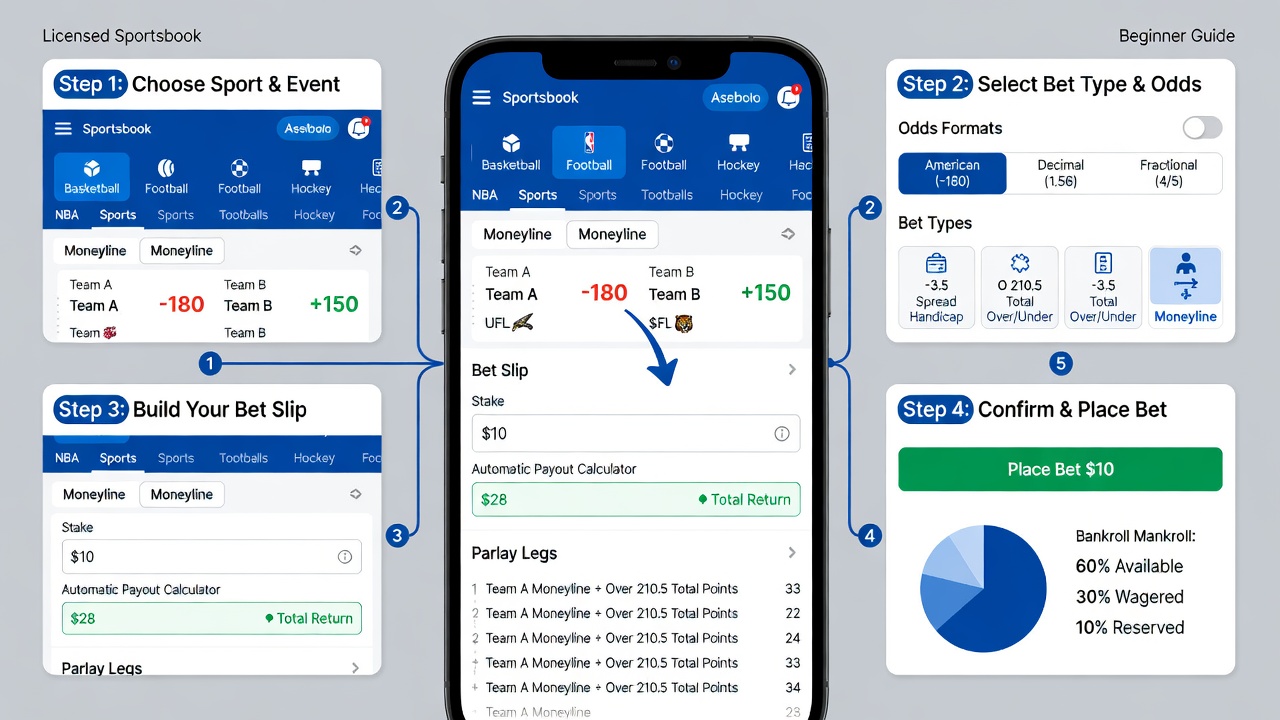
Step 1: Find Your Sport and Market
Use the sport navigation menu to locate the league or event you want. Within that event, markets are grouped - moneyline, spread, totals, and often dozens of "prop" markets tied to specific in-game outcomes.
Step 2: Select Your Odds and Add to Slip
Clicking or tapping an odds figure adds that selection to your bet slip, usually displayed on the side or bottom of the screen. At this point you can still remove or swap selections without penalty.
Step 3: Enter Your Stake
Type the amount you want to risk into the stake field. The slip will automatically calculate potential payout based on current odds, giving you a chance to adjust before committing.
Step 4: Review the Bet Slip Carefully
Check the selection, the odds, and the stake one more time. Odds can shift between the moment you select a market and the moment you're ready to confirm, particularly for live or in-play betting, so a brief review prevents unpleasant surprises.
Placing a Bet Online Tutorial: Walking Through a Real Example
Concrete examples make the abstract steps click into place faster than repeated explanation.
Example: Placing a Moneyline Bet
Suppose two basketball teams are playing and Team A is listed at -180, Team B at +150. Selecting Team A and staking 18 units would return 10 units profit plus your stake back, for 28 total, if Team A wins outright. Selecting Team B instead means a 10-unit stake returns 15 units profit plus stake, for 25 total, reflecting the higher risk of backing the underdog.
Example: Building a Simple Parlay
Combining Team A's moneyline with an over/under selection from a separate game creates a two-leg parlay. Both outcomes must hit for the ticket to pay out, and the combined odds multiply rather than add, producing a larger potential return alongside larger risk.
Common Beginner Errors During This Process
New bettors frequently confuse a spread bet for a moneyline bet, misreading which team is favored. Others adjust their stake after odds have shifted and forget to recheck the final payout figure. Slow connections during live betting can also cause a selection to expire before submission, requiring a fresh selection.
How to Confirm and Submit a Wager
Confirmation is the point of no return, and sportsbooks build in deliberate friction here to prevent accidental bets.
Final Review Before Confirmation
Most platforms display a summary screen showing selection, odds, stake, and potential payout side by side. Read every line, not just the total, since a misclicked market or an extra parlay leg is easy to miss at a glance.
The Confirm Button and What Happens Next
Tapping "Place Bet" or "Confirm" locks in the wager instantly. Odds are fixed at the moment of confirmation, regardless of later movement, which is why sportsbooks sometimes flash a brief "odds have changed, accept new odds?" prompt if the market moved during your review.
Reading Your Bet Confirmation and Ticket ID
After submission, you'll receive a confirmation screen and usually a ticket or reference number. Save or screenshot this, particularly for larger wagers, since it's your proof of the transaction if any dispute arises later.
Managing Your Bets After Placement
Placing the wager isn't the end of the process - tracking it properly matters just as much.
Tracking Open Bets
Every sportsbook maintains a "My Bets" or "Bet History" section showing pending, settled, and voided wagers. Checking this regularly helps you understand your actual win rate rather than relying on memory, which tends to overweight big wins and underweight losses.
Cashing Out Early
Many platforms offer a cash-out option, letting you settle a bet before the event finishes for a partial payout based on current odds. This locks in a guaranteed result but usually at a slightly worse rate than waiting for the outcome, so it's a trade-off between certainty and potential upside.
Understanding Settlement and Payout Timing
Once an event ends, bets settle automatically, usually within minutes for straightforward markets and longer for props dependent on official statistics. Winnings post directly to your account balance, from which you can withdraw or place additional wagers.
Frequently Asked Questions
Do I need to verify my identity before placing my first bet?
Most sportsbooks let you place a bet before full verification but will hold withdrawals until your identity is confirmed. It's more efficient to complete verification during registration rather than waiting until you need to cash out.
What happens if odds change after I select a market but before I confirm?
The sportsbook will typically flag the change and ask whether you accept the new odds before finalizing the bet. You can decline and the selection will remain on your slip at the original odds until you choose to accept or remove it.
Can I cancel a bet after confirming it?
Once you confirm and submit a wager, it's generally locked in and cannot be canceled directly. Some platforms offer a cash-out feature that lets you close the position early for a different payout, but this isn't the same as a true cancellation.
Is a parlay riskier than placing separate single bets?
Yes - every leg of a parlay must win for the ticket to pay out, so the combined probability of success is lower than any single leg on its own. The trade-off is a higher potential payout relative to the stake, since the odds multiply across legs.
How do I know if a sportsbook is legitimate before depositing money?
Check for a visible gaming license from a recognized regulatory authority, usually listed in the site footer. Legitimate operators also publish clear terms on withdrawal timelines, verification requirements, and responsible gambling tools.
Why did my bet get voided after the event finished?
Bets are voided for reasons like a canceled event, a market error in the posted odds, or a rule specific to that bet type, such as a player not reaching the required minutes for a prop bet. Voided bets typically return your original stake in full rather than counting as a win or loss.