How to Set Up a Helicopter Landing Zone: Rescue Operations, Demo Flights, Rotor Stabilization, and Flight Safety Briefings
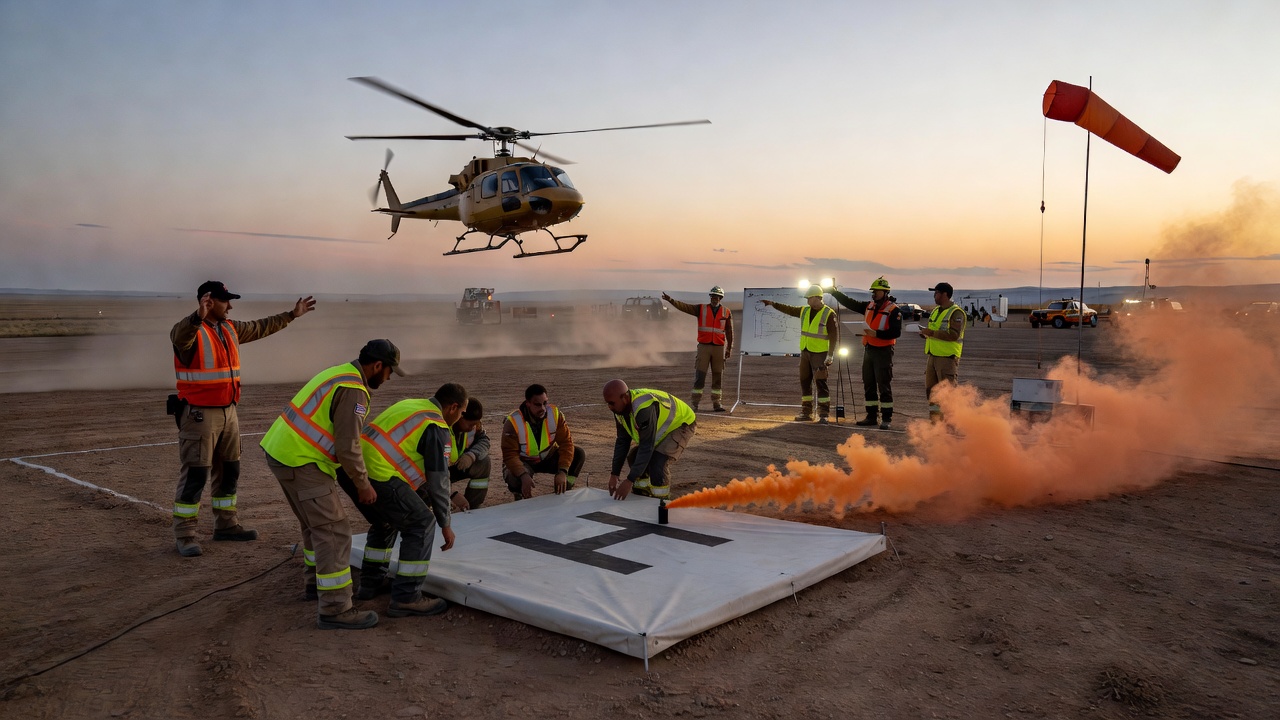
A rotor disk spinning at several hundred revolutions per minute generates downwash strong enough to hurl loose gravel, sheet metal, and unsecured equipment across a hundred-foot radius. That single fact explains why setting up a helicopter landing zone is treated as a discipline in its own right rather than an afterthought bolted onto flight operations. Whether the aircraft is inbound for a medevac extraction, a static display at an air show, or a routine training sortie, the ground preparation determines whether the mission succeeds cleanly or ends with a damaged skid, an injured spectator, or a scrubbed approach.
Ground crews who work regularly with rotary-wing aircraft describe the job in blunt terms: the zone either meets the aircraft's requirements or it doesn't, and there is no partial credit. Even recreational interest in rotorcraft has grown alongside this operational reality - players exploring the helicopter x demo on gaming platforms often get their first exposure to rotor mechanics and flight dynamics through simulated scenarios before ever seeing the real thing. That crossover between simulation and practice underscores a point worth taking seriously: understanding how a landing zone functions isn't just for flight crews anymore.
This piece walks through the practical steps behind selecting and marking a zone, the added pressures of helicopter rescue operations, the choreography of a helicopter demo flight, the physics behind helicopter rotor stabilization, and the structure of a proper helicopter flight safety briefing. Each element connects to the next, and skipping one tends to expose weaknesses in all the others.
Understanding the Basics of a Helicopter Landing Zone
What Defines a Suitable Landing Site
A usable landing zone starts with size and surface. Most light and medium helicopters need a clear area roughly 100 feet by 100 feet, free of loose debris, standing water, and overhead obstructions like power lines or low branches. Slope matters as much as size - anything beyond a gentle grade complicates skid or wheel contact and can shift the aircraft's center of gravity during touchdown. Surface composition counts too: dry, compacted soil or pavement holds up far better under rotor wash than loose sand or dry grass, both of which can kick up debris clouds that obscure the pilot's visual references during the final seconds of approach.
Marking and Communicating the Zone to Pilots
Visual markers give the pilot confidence long before touchdown. A common approach uses a weighted "H" or "X" panel in a color that contrasts sharply with the ground, supplemented by smoke or a wind sock to indicate wind direction and speed. Radio communication between ground personnel and the cockpit should confirm the zone's coordinates, obstacles, and surface condition before the aircraft begins its final descent. Silence or ambiguous hand signals at this stage cause more aborted approaches than any mechanical issue.
Common Mistakes in Zone Selection
- Choosing a site near loose gravel, sand, or mulch that becomes airborne under rotor wash
- Underestimating the clearance needed for tail rotor swing on uneven ground
- Placing the zone too close to spectators, vehicles, or structures without accounting for wind gusts
- Failing to check for wildlife or debris that migrated into the area between inspection and landing
Setting Up a Landing Zone for Helicopter Rescue Operations
Time Pressure and Its Effect on Zone Preparation
Rescue scenarios compress every step described above into minutes rather than hours. There is rarely time for a full site survey, so ground teams rely on rapid visual assessment: is the area flat enough, clear enough, and large enough right now? In helicopter rescue operations, the priority shifts from perfection to acceptable risk - a zone that would be rejected for a training flight might be the only viable option in a mountain rescue or a flooded roadway extraction.
Coordinating with Ground Teams and Medical Personnel
Multi-agency coordination becomes the deciding factor in how smoothly a rescue lands and departs. Fire crews, paramedics, and law enforcement each have a role in securing the perimeter, managing bystanders, and relaying real-time information to the pilot about wind shifts or newly discovered obstacles. A single point of contact on the radio prevents conflicting instructions from reaching the cockpit at the worst possible moment.
Handling Unstable or Uneven Terrain
Rescue sites rarely offer flat pavement. Rocky outcrops, riverbanks, and collapsed structures all demand that the pilot adjust approach angle and hover height on the fly. Ground crews can help by identifying the most level patch available, even if it's smaller than ideal, and clearly marking any hazards like exposed rebar or unstable footing that could shift once rotor wash hits the area.
Preparing a Landing Zone for a Helicopter Demo Flight
Audience Safety Perimeters
A helicopter demo flight introduces a variable that rescue and training operations don't usually face in the same way: a crowd. Safety perimeters for demonstration events are typically set well beyond the aircraft's rotor diameter, with barriers or rope lines reinforced by staff who actively keep spectators from drifting closer. Wind direction dictates where debris and noise will travel, so organizers often position viewing areas upwind of the landing pad.
Coordinating Ground Crew Signals During Public Events
Public demonstrations demand more formal signaling than a routine operational landing. Ground crew members typically use standardized hand signals - visible even over engine noise - to guide the aircraft into position, confirm shutdown sequence, and indicate when it's safe to approach for static viewing. Any deviation from these agreed signals risks confusing the pilot at a moment when hundreds of eyes are watching.
Managing Noise and Visual Impact for Spectators
Event organizers weigh rotor noise and visual disruption as part of the planning process, not as an afterthought. Positioning the aircraft's flight path to avoid direct overflight of dense crowd areas reduces both noise exposure and the psychological startle effect of a low pass. Briefing announcers ahead of time on what the aircraft will do next keeps the audience informed and reduces the chance of someone stepping past a barrier out of curiosity.
The Role of Helicopter Rotor Stabilization in Safe Landings
How Rotor Dynamics Affect Ground Approach
Rotor stabilization isn't just a cockpit concern - it directly shapes what ground crews need to prepare for. As the aircraft descends into ground effect, the rotor disk interacts with air compressed near the surface, which can cause subtle shifts in lift and control response. Pilots compensate constantly during this phase, and a landing zone free of gusty crosswinds or turbulence-generating obstacles (like nearby buildings or tree lines) makes that compensation far easier.
Environmental Factors That Disrupt Stabilization
Wind shear, uneven thermal currents over pavement versus grass, and turbulence bouncing off adjacent structures all challenge rotor stability during approach and touchdown. A zone situated in a wind shadow behind a building might look calm at ground level while masking rotor-disturbing gusts just above it. Ground crews familiar with local terrain can flag these patterns to the pilot before they become a problem mid-approach.
Why Stabilization Matters More During Hover and Touchdown
The moments just before and after touchdown are when rotor stabilization matters most, since the aircraft has the least forward airspeed to smooth out disturbances. A stable hover depends on consistent rotor RPM and a level attitude, both of which are easier to maintain on firm, flat ground than on a slope or soft surface that shifts the aircraft's weight distribution unpredictably.
Conducting a Helicopter Flight Safety Briefing
Key Topics to Cover Before Takeoff
A helicopter flight safety briefing should cover the essentials without turning into a lecture: expected flight path, emergency procedures, communication protocols, and specific hazards tied to the landing zone in use that day. Passengers or ground personnel unfamiliar with rotorcraft need clear instruction on approach and departure paths - specifically, staying clear of the tail rotor and never approaching from the rear.
Briefing Ground Crew vs. Briefing Passengers
Ground crew briefings tend to focus on operational details: signal sequences, radio frequencies, and specific responsibilities during the landing and shutdown sequence. Passenger briefings, by contrast, emphasize personal safety basics - how to approach and exit the aircraft, what to do with loose items, and where to stand while waiting to board. Conflating the two often leaves one group under-informed.
Emergency Procedures and Evacuation Plans
- Location and use of fire extinguishers or emergency shutoff switches near the landing zone
- Designated rally point for passengers and crew in case of an aborted landing or in-flight emergency
- Clear verbal and visual signals for immediate evacuation versus a controlled shutdown
- Contact protocol for alerting medical or fire response if needed
Frequently Asked Questions
How much clearance does a helicopter need on all sides of a landing zone?
Most operators recommend at least a 10-foot buffer beyond the rotor diameter on every side, though rescue situations sometimes accept less if no safer option exists nearby. The buffer accounts for rotor flex, tail swing, and unexpected drift during touchdown.
Can a helicopter land safely on grass or dirt?
Yes, provided the surface is firm and dry enough to support the aircraft's weight without shifting. Loose, dry dirt or tall dry grass creates a brownout risk from rotor wash, which can briefly blind the pilot during the final seconds of approach.
Who is responsible for briefing untrained bystanders near a landing site?
Whoever is coordinating ground operations - typically a designated safety officer or the senior ground crew member - takes responsibility for briefing anyone without prior rotorcraft experience. This includes basic instructions on approach angles, noise expectations, and staying within marked boundaries.
What's the difference between a landing zone for rescue work and one for routine flights?
Rescue landing zones are selected under time pressure and often accept more risk due to urgency, while routine flight zones go through a full inspection process beforehand. Both share the same core safety principles, but rescue operations demand faster judgment calls from ground personnel.
Why do helicopters sometimes hover before landing instead of descending directly?
Hovering allows the pilot to assess ground conditions, confirm rotor stabilization, and verify that the zone remains clear of last-minute hazards like a person or animal entering the area. It's a deliberate pause built into safe landing procedure, not a sign of hesitation or difficulty.
What should spectators know before attending a helicopter demo flight event?
Spectators should stay behind marked barriers at all times, secure loose items like hats or papers that rotor wash could pick up, and follow any instructions from event staff regarding approved viewing areas. Noise levels can be significant at close range, so hearing protection is worth considering for those standing near the perimeter.